
Investor sentiment survey

This article originally appeared in the Autumn 2026 issue of Informed Investor Magazine.
Joanna Mathers takes a deep dive into the results of the Informed Investor sentiment survey (powered by InvestNow) and discovers a cohort that’s cautiously optimistic, despite the tumult of the wider world.
In 2025, international geopolitics was the key concern for the investors who took part in the Informed Investor sentiment survey (powered by InvestNow). War, United States’ vituperative attacks on the established global order, the spectre of climate crisis and talk of an AI bubble – the year was tumultuous.
Fast forward 12 months and not much has changed. At the time of printing, Trump’s 2025 tariffs have been overturned by the Supreme Court, but he’s put short-term 15% tariffs in their place and US warships and fighter jets are hovering over Iran.
The white-knuckle ride looks set to continue, and investors are watching. International geopolitics is still their number one concern, chosen by 22% of respondents.
But market performance may belie their fears. Although the markets in the states nearly dropped into a bear pit in April, after Trump’s “liberation day” tariff announcements, the S&P 500 closed out 2025 with 17% gain.
“Last year’s tariff shock in early April sparked one of the sharpest two‑day drawdowns in decades as markets rapidly repriced trade and growth risks,” says Jason Choy, Senior Portfolio Manager at InvestNow.
“Yet as details softened and investors refocused on fundamentals, markets recovered and the year ended solidly positive for global equities.”
The big lesson from 2025 is behavioural. Investors who stayed disciplined – continued regular contributions or bought the dip – saw strong gains into year‑end. That discipline mattered more than predicting each twist in policy.
Confident cohort
Despite the concerns around geopolitics, the survey reveals a cohort that is confident, experienced and self-directed.
Demographically, the data is enlightening. More than 42% of respondents are aged 55 and over, with a further 43% between the ages of 35 and 54. They are investors in peak earning years, who prioritise portfolio building over risk taking. They are planning for retirement and creating wealth for their families or looking for long-term income sustainability, rather than the sugar hit of short-term gains.
Retirement security, as was the case in 2025, is the primary reason our respondents invest, with 44% stating this was their key driver. Growing wealth for family was the main motivator for 25% of respondents, with the generation of income sitting at 19%.
Speculators make up just 1.5% of our cohort; reflecting the long-term strategy employed by most respondents.
Confidence levels are strikingly high. More than 78% of respondents reported a reasonable or high degree of confidence in their understand of managed funds, with only 5% stating they lacked confidence. And this confidence extends across asset classes. Respondents report confidence with KiwiSaver and property; diversification remains central to their strategy.
Measured optimism
Despite global geopolitical tensions and lingering economic uncertainties, respondents are displaying measured optimism. Many indicate plans to invest further over the coming 12 months, particularly in growth assets such as shares and managed funds.
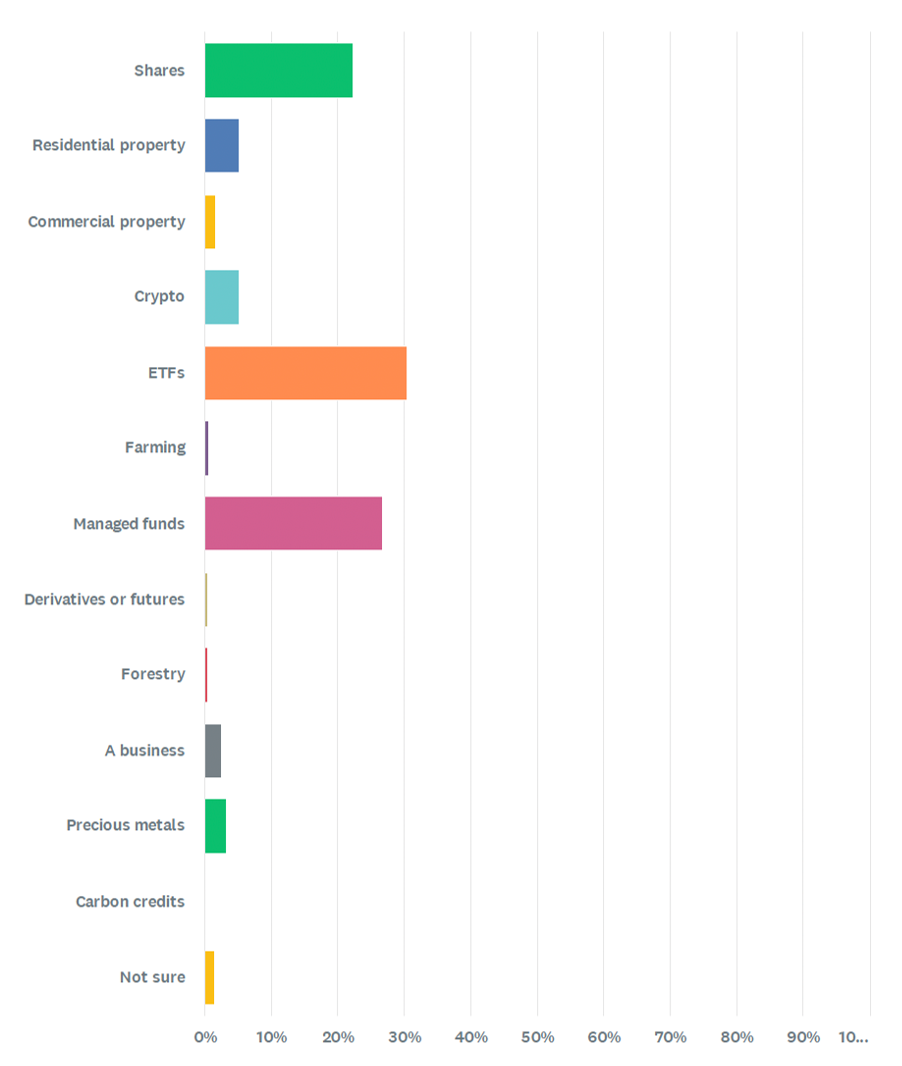
26% of respondents stated they intended to invest in exchange-traded funds (ETFs) this year; managed funds continue to play a central role, with nearly 27% intending to invest in this asset class. At the other end of the scale, crypto, gold and silver, which have been behaving erratically in recent months, are only of interest to a combined 8% of respondents.
Experience underpins this confidence. Most respondents have invested for years, navigating pandemic-era volatility, inflation surges and rapid interest rate changes. Having weathered multiple cycles, they are resilient and understand the market.
Another notable takeaway is that Kiwi investors love DIY. Only 11% of respondents use financial advisers (down from 21% last year) with the rest relying on their own knowledge. As 63% of the respondents are over 45, and nearly 50% have been investing for over ten years, experience levels are likely to play a part here.
And Choy believes this confidence is also due to investors having ready access to digital platforms.
“With today’s platforms, a sensible, diversified portfolio is easier to assemble than it was even five years ago. Minimums are low, fees are transparent, and guidance is widely available – so many Kiwis self‑direct by default,” he says.
The advice market naturally focuses on higher‑balance households; digital content and tools now fill much of the “coaching” gap for emerging investors.
“Regulators are actively exploring how to improve advice accessibility and where digital advice fits, which mirrors what we see on the ground: a hybrid model where people self‑manage day‑to‑day and seek episodic advice at life milestones.
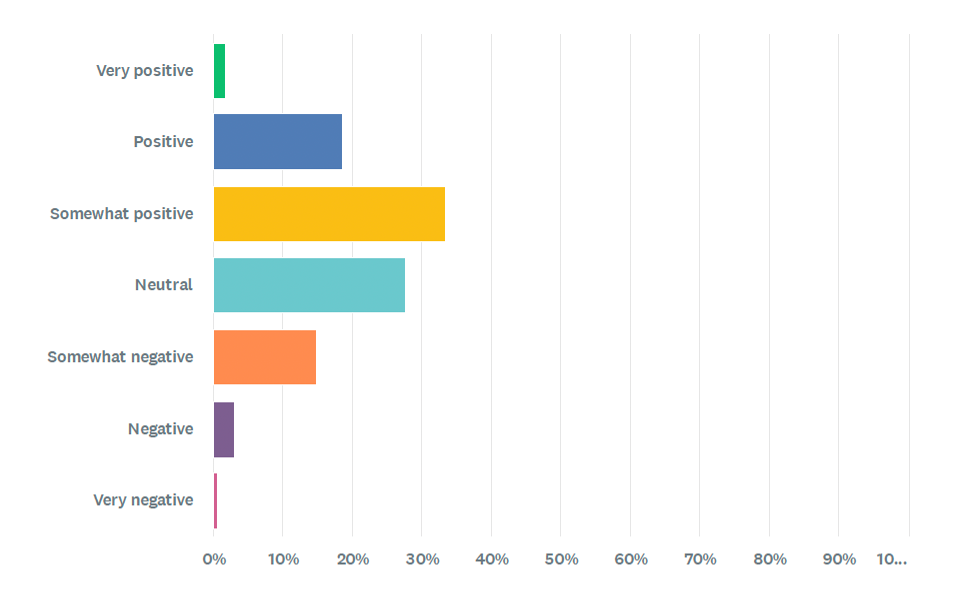
Do you feel positive or negative about returns in 2026?
Changing demographic
Last year, the survey revealed a high-income level of respondents, with 5% listing their annual salary as $1 million-plus; 10% earning over $250,000 and 20% earning between $150,000-$250,000 a year.
This year, a significant cohort with salaries of under $100,000 has emerged (around 45%). The shift towards egalitarian investment has developed significantly since Covid, Choy states.
“Lockdowns were a watershed moment: with concerts, sport and travel off the table, many people tried investing for the first time. Some dabbled in single stocks or meme names for the “gateway” experience,” says Choy.
He says that five years on, the cohort that stuck around looks very different. They are older, with bigger balances and more life commitments (mortgages, kids, careers).
“And there has been a clear pivot toward diversified funds, fee and tax optimisation, and active KiwiSaver engagement. Platform innovation – low minimums, fractional access, auto‑invest – has helped democratise investing for average incomes.”
What assets are you most likely to invest in?
KiwiSaver connection
KiwiSaver sits at the heart of this deepening of the investor pool. There are now 3.39 million members and $123 billion in funds, with average balances still rising.
Choy states that with more members in growth‑aligned options and better engagement, KiwiSaver has become a meaningful wealth pillar even for average‑to‑lower incomes, not just high earners.
“The scale and resilience through recent cycles back that up.”
The survey reveals a good understanding of the scheme; 73% stated they were reasonably or very confident in their understanding of KiwiSaver.
But while the high-level KiwiSaver literacy is good news, the survey revealed a slightly alarming shift since last year.
Where there was a 50/50 split of male and female in 2025, 68% of respondents this year are male, with just 32% female.
Choy isn’t surprised; and doesn’t believe it is around lack of engagement in the market.
“It’s not unusual to see a male skew in general‑investing surveys, even as women’s participation rises. The barrier we hear most often isn’t ability, it’s confidence.
He says that multiple studies have shown that women report lower investing confidence and are more likely to say they “don’t know enough,” despite often having equal or better everyday money habits and, when invested, trading less and sticking to plans.
Staying the course
Although there may be concern about geopolitics, the survey reveals that are investors are staying the course. An overwhelming 97% of respondents intend to invest in the next 12 months; only 20% are intending to sell.
“This is very positive,” says Choy.
He says the pivot from “timing the market” to “time in the market” was validated in 2025.
Despite the April tariff shock, many Kiwi investors kept contributing and enjoyed markets finishing the year in a strong position.
“This contrasts with the Covid-19 crash earlier in the decade, where many investors fled to cash and locked in losses amid fear-driven headlines, only to miss out on the market’s sharp recovery in the same calendar year.”
This deeper understanding of the market can be seen in the confidence levels around returns; only 17% of respondents feel negative about their returns in 2026. It may be tough out there, in many ways, but our informed investors still have faith in the market.
Disclaimer:
This information is provided by InvestNow Saving and Investment Service Limited (“InvestNow”). The information and any opinions in this publication are based on sources that InvestNow believes are reliable and accurate. InvestNow, its directors, officers and employees make no representations or warranties of any kind as to the accuracy or completeness of the information contained in this publication and disclaim liability for any loss, damage, cost or expense that may arise from any reliance on the information or any opinions, conclusions or recommendations contained in it, whether that loss or damage is caused by any fault or negligence on the part of InvestNow, or otherwise, except for any statutory liability which cannot be excluded. All opinions and market commentary reflect InvestNow’s judgment on the date of this publication and are subject to change without notice. This disclaimer extends to any entity that may distribute this publication. The information in this publication is not intended to be financial advice for the purposes of the Financial Markets Conduct Act 2013, as amended by the Financial Services Legislation Amendment Act 2019. In particular, in preparing this document, InvestNow did not take into account the investment objectives, financial situation and particular needs of any particular person. Professional investment advice from an appropriately qualified adviser is recommended before making any investment. All Investments involve risk. Examples of specific fund performance are for illustrative purposes only and are not intended as a recommendation. Past performance is not a reliable indicator of future results.



Leave A Comment